- 三中心共 84 例 BAP1 突变型 ccRCC(SYSUCC 16、TCGA-KIRC 38、CPTAC 30);截短突变为主(约 60%–69%)。
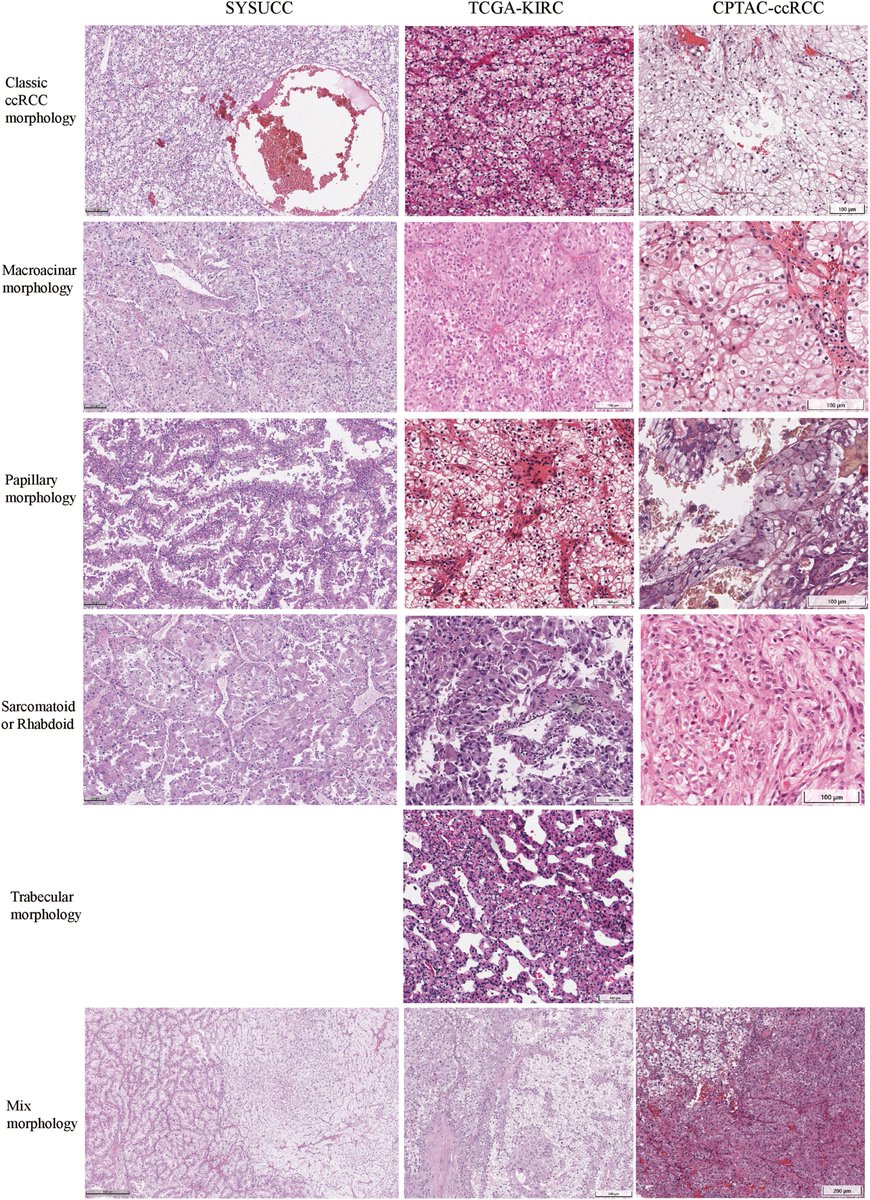
- 归纳 6 种形态亚型(经典型、大腺泡型、乳头状、肉瘤样/横纹肌样、小梁型、混合型),以大腺泡型与混合型最常见;混合型半数为乳头状+大腺泡组合。
- SYSUCC 病例肿瘤细胞核 BAP1 完全缺失,AMACR 多呈弥漫强阳;各队列 >65% 为高核级(G3/G4),全队列中位 OS 73.8 月、DFS 63.8 月。
收录范围:仅 PubMed 英文摘要及中文翻译(abstract-only);ScienceDirect 全文受 Cloudflare 限制,未采集全文或全文图表。X 配图来自 @Human_Pathology 推文卡片。
摘要
体细胞 BAP1 突变驱动一类独特且侵袭性的透明细胞肾细胞癌(ccRCC)亚型,但既往研究样本量有限,其完整组织形态学谱尚不清楚。本研究旨在全面刻画 BAP1 突变型 ccRCC,并在多中心队列中界定其形态学亚型。
回顾性纳入来自三个队列的 84 例 BAP1 突变型 ccRCC:中山大学肿瘤防治中心(SYSUCC)16 例、TCGA-KIRC 38 例、CPTAC-ccRCC 30 例。截短突变是各队列中主要的 BAP1 突变类型,分别占 SYSUCC 的 68.8%、TCGA-KIRC 的 60.5% 与 CPTAC-ccRCC 的 60.0%。共识别六种不同形态学亚型(经典型 ccRCC、大腺泡型、乳头状、肉瘤样/横纹肌样、小梁型与混合型),其中大腺泡型与混合型最为常见。混合型病例中 50% 为大腺泡型与乳头状亚型的组合。全部 SYSUCC 病例经 IHC 显示肿瘤细胞细胞核 BAP1 完全缺失,并伴以弥漫强阳性为主的 AMACR(P504S)染色。各队列中超过 65% 的病例为高核级(G3/G4);进展率分别为 SYSUCC 队列 37.5%、TCGA-KIRC 队列 39.5%、CPTAC-ccRCC 队列 23.8%。就全队列而言,中位总生存期(OS)为 73.8 个月,中位无病生存期(DFS)为 63.8 个月。
本研究厘清了 BAP1 突变型 ccRCC 的临床病理与形态学特征,并界定六种不同形态学亚型。这些发现扩展了该侵袭性 ccRCC 亚群的临床病理谱,为临床诊断提供了标准化形态学分类框架。
- 84 BAP1-mutated ccRCCs from three cohorts (SYSUCC 16, TCGA-KIRC 38, CPTAC 30); truncating mutations predominated (~60%–69%).
- Six morphological subtypes were defined (classic, macroacinar, papillary, sarcomatoid/rhabdoid, trabecular, mixed); macroacinar and mixed were most common, and half of mixed cases combined papillary + macroacinar.
- All SYSUCC cases showed complete nuclear BAP1 loss with predominantly diffuse-strong AMACR; >65% in each cohort were high nuclear grade (G3/G4); cohort median OS 73.8 months, DFS 63.8 months.
Scope: PubMed abstract only. Full text and full-text figures or tables were not collected because ScienceDirect is blocked by Cloudflare from this site’s egress. Card image from the @Human_Pathology X post.
Abstract
Somatic BAP1 mutations drive a distinct and aggressive subtype of clear cell renal cell carcinoma (ccRCC), but its full histomorphological spectrum remains unclear due to small sample sizes in previous studies. This study aimed to comprehensively characterize BAP1-mutated ccRCC, define its morphological subtypes in a multi-center cohort.
A retrospective multi-center study was performed including 84 BAP1-mutated ccRCC cases from three cohorts, 16 from Sun Yat-sen University Cancer Center (SYSUCC), 38 from TCGA-KIRC, and 30 from CPTAC-ccRCC. Truncating mutations were the predominant BAP1 mutation type across all cohorts, accounting for 68.8% in SYSUCC, 60.5% in TCGA-KIRC, and 60.0% in CPTAC-ccRCC. Six distinct morphological subtypes were identified (Classic ccRCC, Macroacinar, Papillary, Sarcomatoid/Rhabdoid, Trabecular, and Mixed), with Macroacinar and Mixed subtypes being the most prevalent. 50% of Mixed subtype cases were a combination of Papillary and Macroacinar subtypes. All SYSUCC cases showed complete nuclear BAP1 loss in tumor cells by IHC, accompanied by predominantly diffuse-strong AMACR (P504S) immunostaining. Over 65% of cases in each cohort had high nuclear grade (G3/G4), with progression rates of 37.5% in the SYSUCC cohort, 39.5% in the TCGA-KIRC cohort, and 23.8% in the CPTAC-ccRCC cohort, respectively. For the entire cohort, the median overall survival (OS) was 73.8 months and median disease-free survival (DFS) was 63.8 months.
This study clarifies the clinicopathological and morphological features of BAP1-mutated ccRCC and defines six distinct morphological subtypes. These findings expand the clinicopathological spectrum of this aggressive ccRCC subset, provide a standardized morphological classification for clinical diagnosis.